Money Bunny
Survive Horde
← Portfolio
Overview
I led the design of Money Bunny Survive Horde from the first prototype through gold master and on into live operations, while also carrying product management responsibilities across the full cycle.
As lead I set the game's direction and owned its core systems while guiding a team of two designers to deliver them. The game is built on intense, responsive combat against waves of enemies, layered over deep progression and meta systems that give players a reason to keep coming back.
On the product side I owned milestone delivery and the quality bar at each phase, coordinated across engineering, art, and product, and drove the data-informed updates that kept improving the game after launch.
What I Was Aiming For
Combat That Stays Fresh
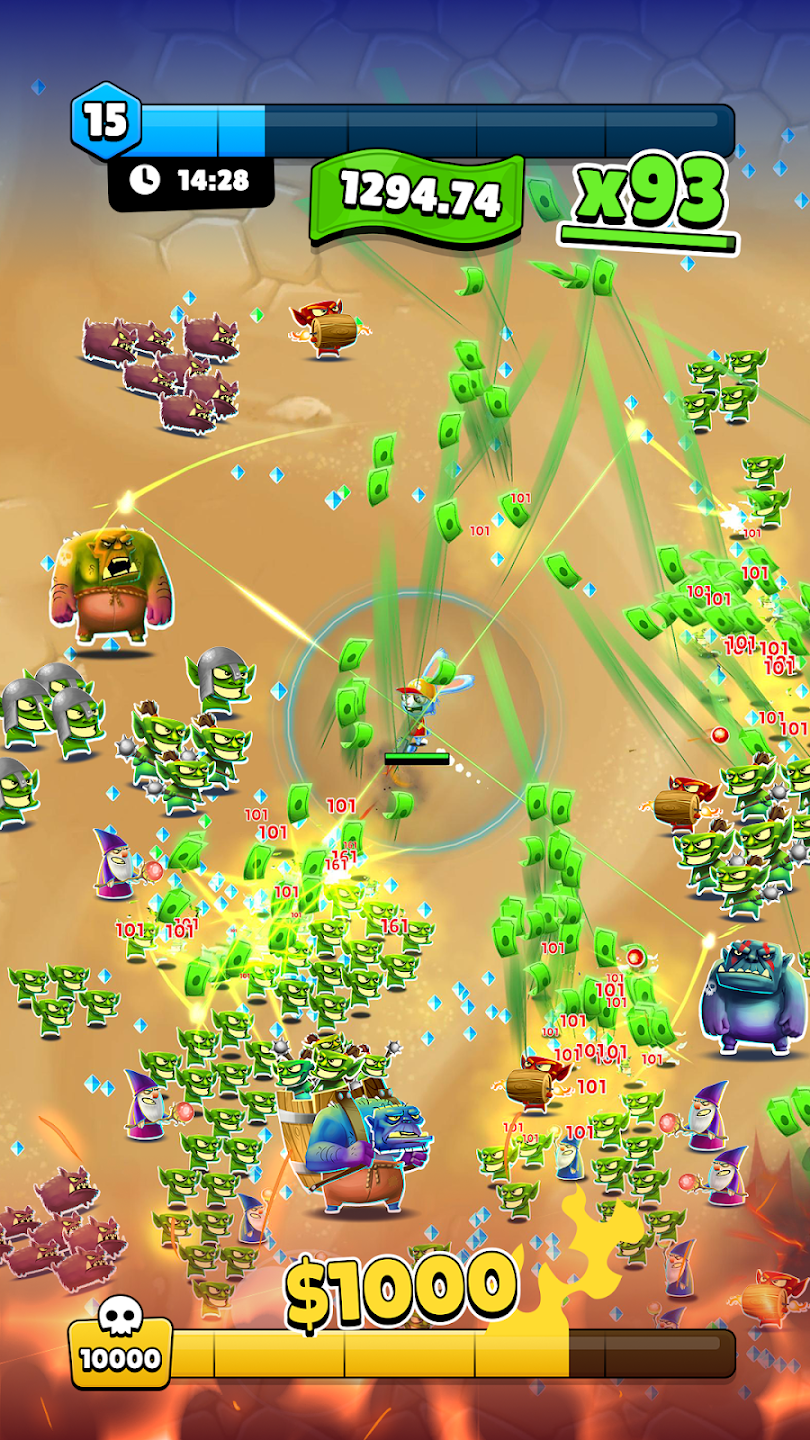
Horde combat goes stale when enemies are predictable. I introduced smarter AI hordes and mini-boss mechanics so fights had texture and spikes rather than a flat grind. Balancing enemy and weapon attributes meant difficulty climbed fairly — harder without feeling cheap.
Meta That Pulls Players Back
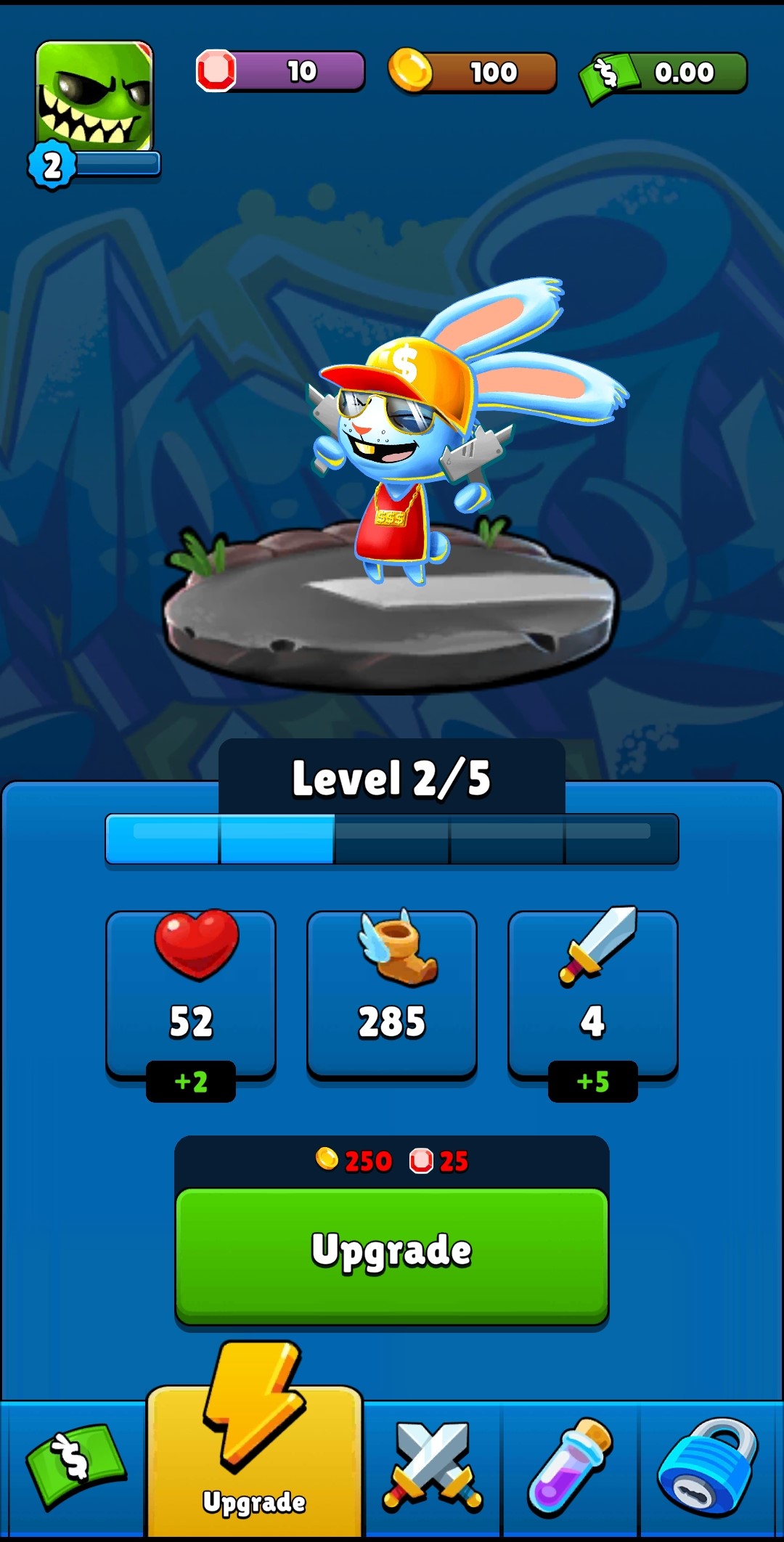
Fun combat gets players in. A meta that rewards investment keeps them. I built upgrade systems across power, speed, and damage, an evolution system that deepens character progression over time, and a balanced economy tying coins, drops, and consumables together — so resources felt rewarding rather than arbitrary.
First Session Retention
A horde combat game can overwhelm a newcomer fast if it doesn't teach its systems clearly. I designed the onboarding to get players competent before the difficulty ramps — because what happens in the first session decides whether there's a second one.
How It Came Together
I defined the core vision and the gameplay pillars, then built the core combat loop and basic enemy systems to validate that the gameplay feel and the core mechanics were fun before scaling anything up. Nothing built on a bad prototype is worth keeping.
I expanded the systems with abilities, AI variations, and combat progression that escalates as waves grow tougher. I built the special attacks and power systems, introduced the smarter AI hordes and mini-boss mechanics, and added the economy and upgrade systems. I managed and mentored the two designers through this phase, reviewing their work as the prototype grew into a full game.
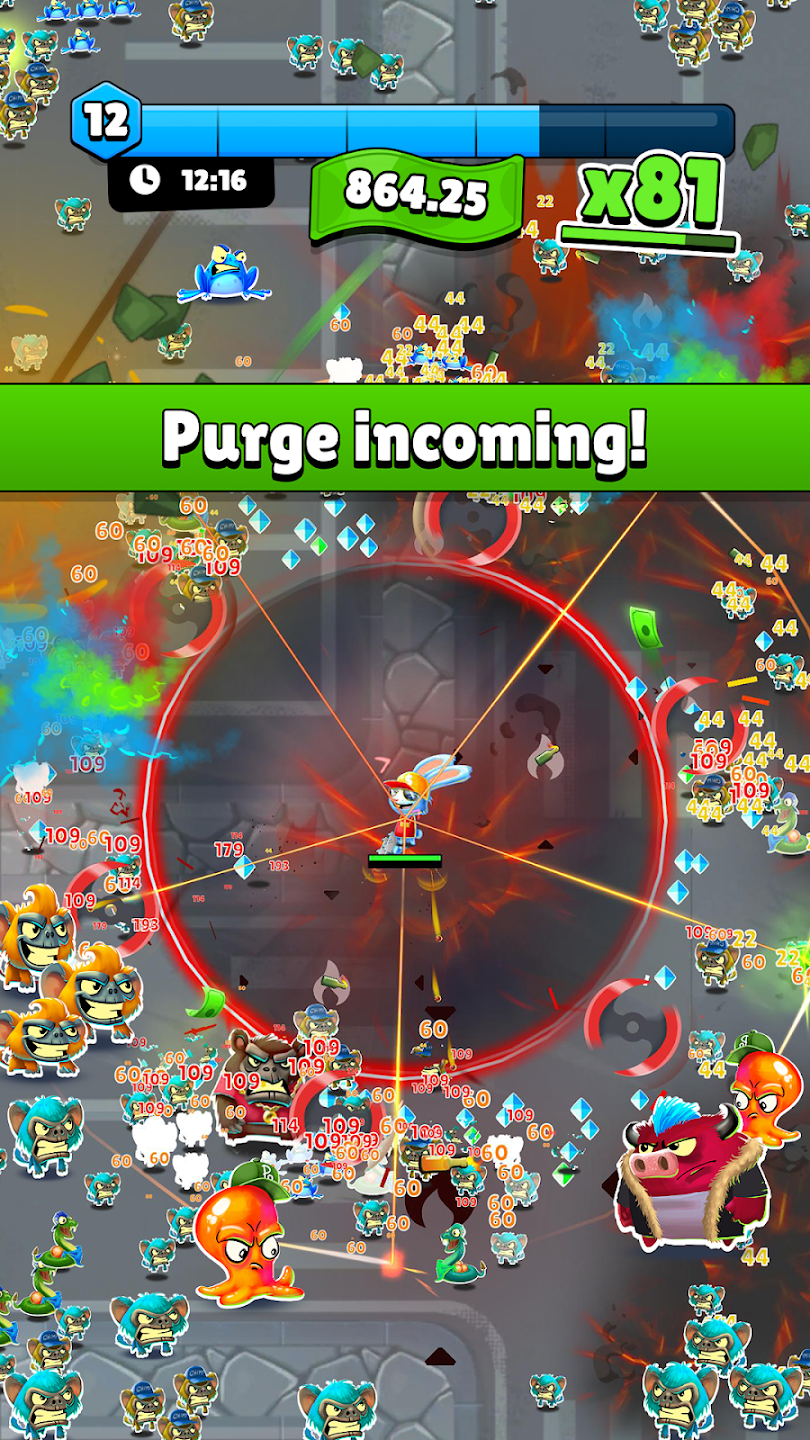
I balanced gameplay, economy, and progression together. I improved the store UX and the engagement systems, designed a tournament mode for competitive players, refined the tutorial and onboarding, and fixed the major gameplay issues that surfaced once everything was interacting at once.
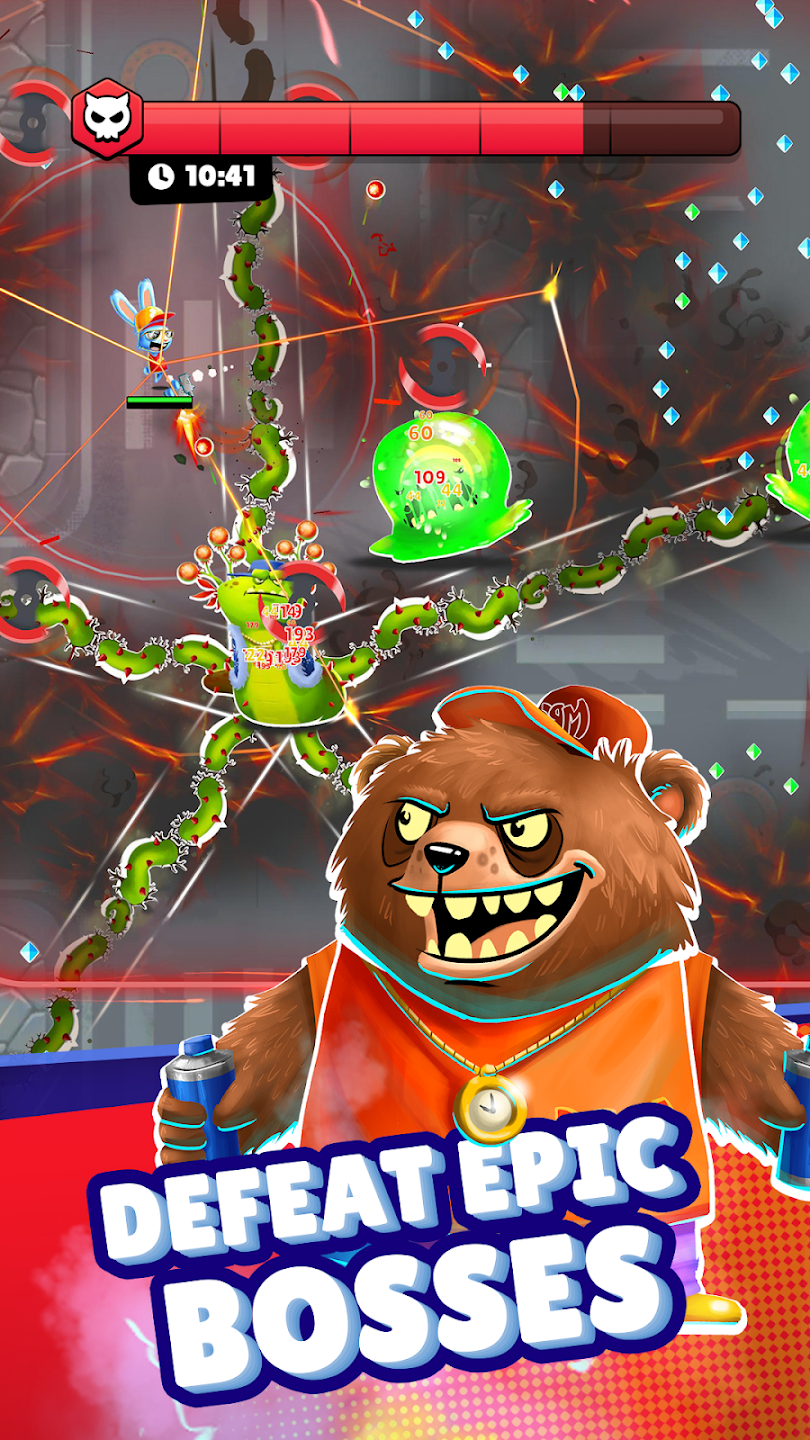
Final polish, optimisation, and content lock. Delivered on time — milestone ownership was part of the product management brief as much as the design brief.
The first update focused on the early game. I improved the early progression and the tutorial clarity, and rebalanced the horde difficulty and the weapons. That work lifted D1 retention, improved session length, and reduced the early drop-offs that cost a game its new players. Every change was targeted at what the data had flagged rather than guessed at.
The second update went deeper into the meta. I expanded the evolution system, improved the tournament rewards, and enhanced the store UX. The result was higher D7 retention, more sessions per day, an increase in conversion, and reduced churn — which is what a well-targeted second update looks like when the first one correctly identified the right friction to remove.
What I Owned
Game vision and pillars. Core horde combat systems, special attacks, and power systems. AI horde behaviour and mini-boss design. Upgrade systems across power, speed, and damage. Evolution system. Economy design — coins, drops, consumables. Store UX and engagement systems. Tournament mode. Onboarding and tutorial. Two live updates. Management and mentoring of two designers. On the product side: cross-team coordination, milestone delivery, quality bar ownership, and data-driven post-launch iteration.
Retention & Engagement
- D1 retention lifted after Update 1 early-game improvements
- D7 retention up after Update 2 meta expansion
- Session length improved following horde rebalance
- Sessions per day increased after evolution and tournament updates
- Early drop-off reduced — more players cleared the first session
Combat & Monetization
- Dynamic enemy behaviour gave runs genuine variety — replayability up
- Mini-boss mechanics added spikes and texture to wave design
- Store UX improvements raised conversion
- Tournament mode gave competitive players a recurring hook
- Churn reduced after meta deepening in Update 2
- Game shipped and updated on schedule across full cycle